
Quick Reference
1933
Leyden Village, Mass.
Down the hill from town hall
Oil on Canvas
Landscape
Houses, People & Livestock
25" x 30"
Williams College, 1933
Amherst Coll. Jones Library, 1934
Syracuse (NY) MFA, 1934
Macbeth Galleries (NYC), 1934
-1935, '37, and '38
Deerfield Academy, 1935
Oqunquit Art Center (Maine), 1935
Mt. Holyoke Coll. Dwight Hall, 1935
Grand Central Galleries (NYC),
-1936, '37, and '44
Unknown
NA
Related Links
- See also the...
 Houses Gallery to view related pieces.
- See also the...
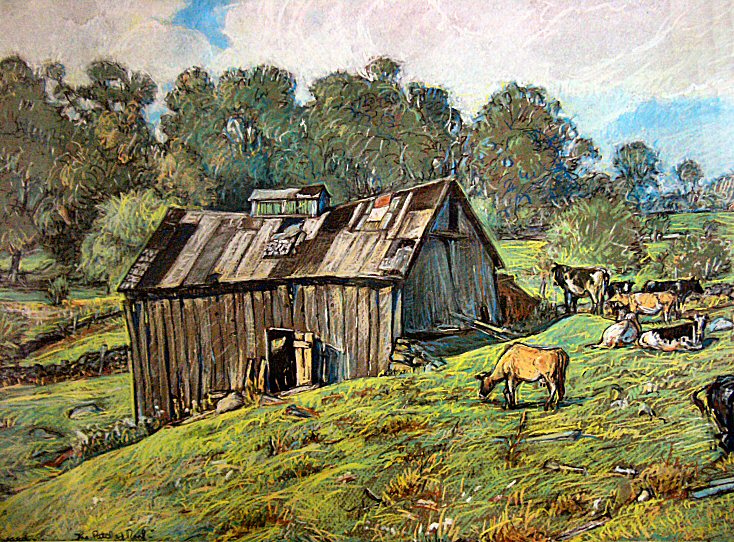 People & Livestock Gallery for related pieces.
- See also...
734WM.png) Country Piazza for a painting linked to the 1929 chalk drawing with the same name.
Country Piazza for a painting linked to the 1929 chalk drawing with the same name.
- See also...
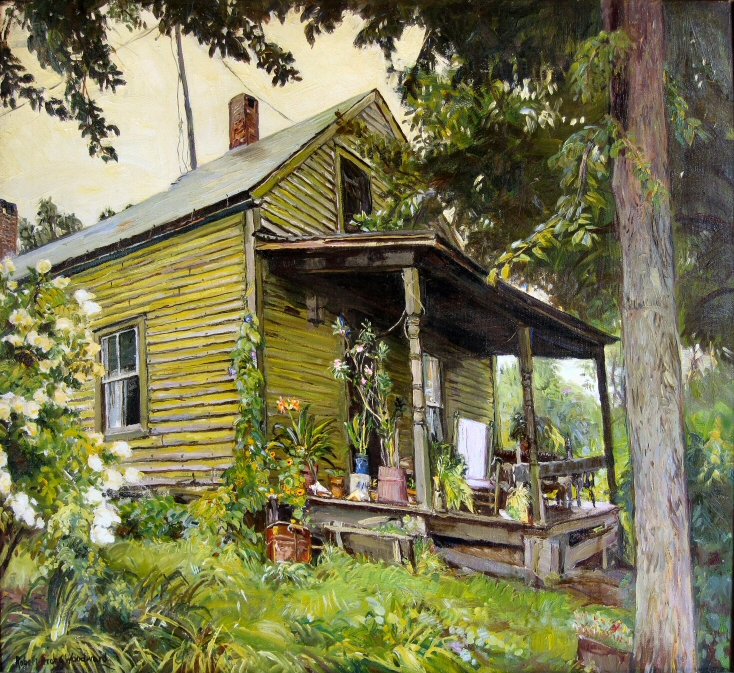
Mrs. Keach's Front Porch for another 1933 painting linked to this artwork.
- See also the Exhibition List for other Exhibits.
.png)

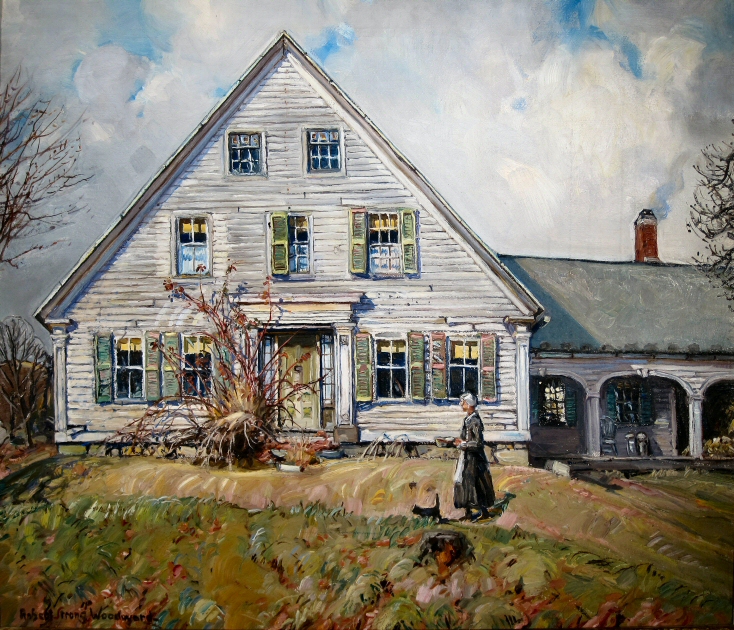
Featured Artwork: The Genial Old House
RSW's Diary Comments
"Painted about 1930. The front facade and ell of a rare old house in Leyden village. House the main subject, weather beaten old white paint, with faded battered old green blinds, very fascinating to me. I have always considered this one of my finest expressions, perfectly painted, really "big" picture, but it has never been very popular with the public. Farmer's wife in black with black cat in front yard."
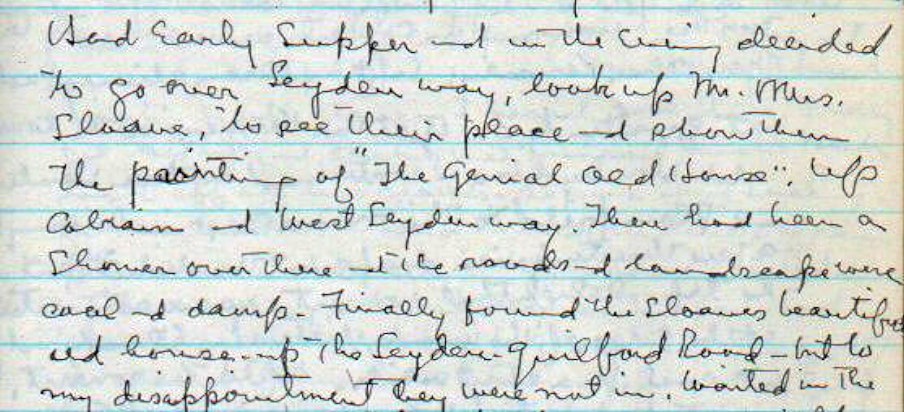
Excerpt from an RSW painting diary:
Comments on the back of a sepia print:
"One of my most loved canvases. House faded white, much weathered, soaking in the sun, faded green blinds. Delicate and lovely in color. Outstanding canvas."
Transcription of diary excerpt:
"Had early supper and in the evening decided to go over Leyden way, look up Mr. --d Mrs. Sloane, to see their place --d show them the painting of "The Genial Old House", up Colrain --d West Leyden way. There had been a shower over there and the roads and landscape were cool and damp. Finally found the Sloanes beautiful house up this Leyden Guilford Road - but to my disappointment they were not in. Waited in the car..."
Additional Notes
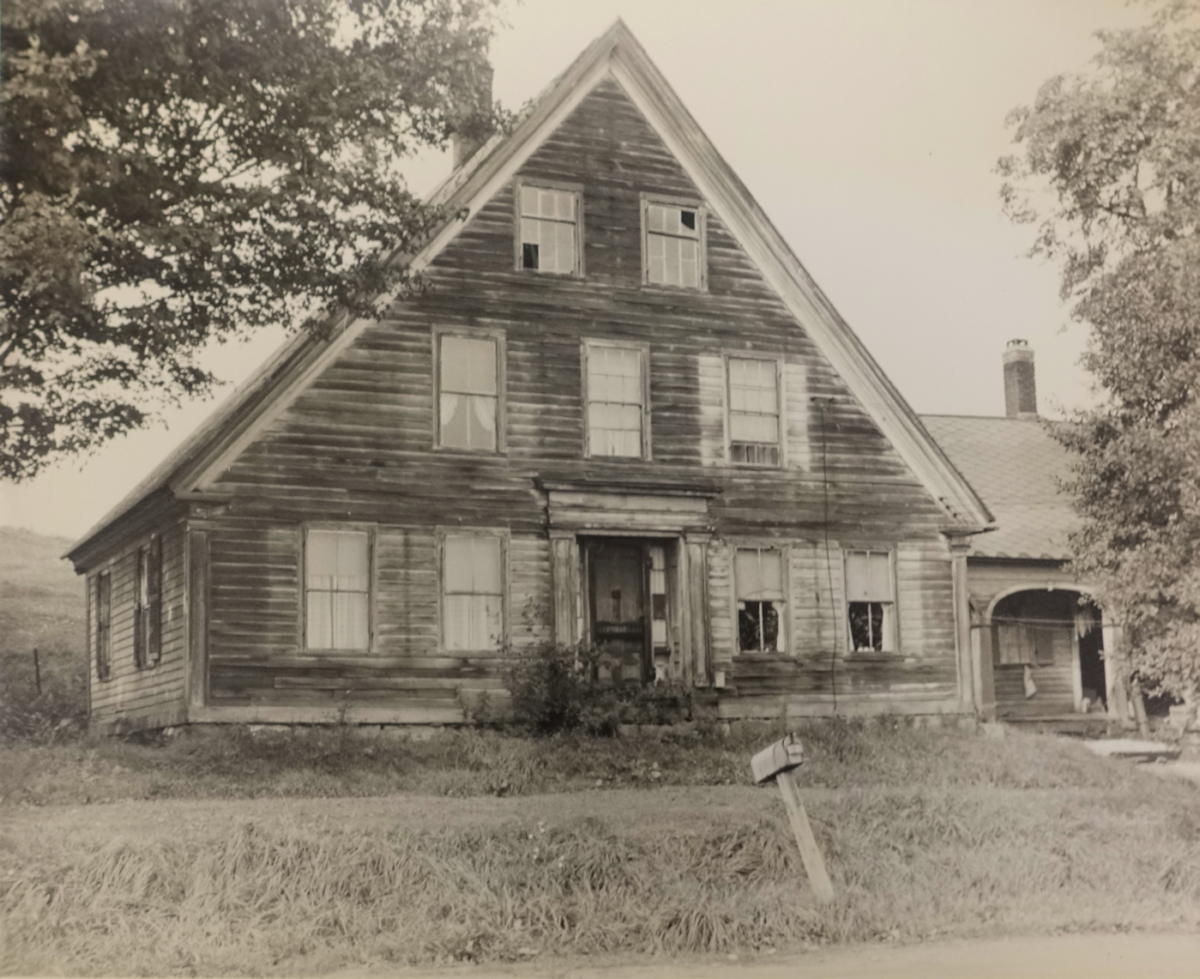
 An old photograph of the Genial Old House from
what we believe was a number of years after
and perhaps a casualty of the depression.
 To the left: is an old 8 x 10" photograph of the house
appearing in this artwork. We believe it was taken a number of years later. Note that the white paint is
barely visible; all of the shutters have been removed; the bush by the front stoop is cut down; and there is a
missing windowpane, as well as, a broken pane in the top row of windows. The painting was made in 1929 and
this could be anytime after that, perhaps a decade later. It is possible that the house was going to get a
makeover and Woodward went to Leyden to photograph the house before it happened.
To the left: is an old 8 x 10" photograph of the house
appearing in this artwork. We believe it was taken a number of years later. Note that the white paint is
barely visible; all of the shutters have been removed; the bush by the front stoop is cut down; and there is a
missing windowpane, as well as, a broken pane in the top row of windows. The painting was made in 1929 and
this could be anytime after that, perhaps a decade later. It is possible that the house was going to get a
makeover and Woodward went to Leyden to photograph the house before it happened.
We believe this painting is the second in a series of "editorial
paintings" Woodward made during the height of the depression. It was followed by paintings like Contentment, Portrait of a
Shadow, New England Heritage, and Passing New England among others.
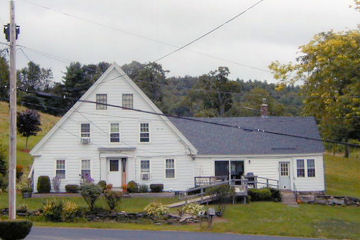
The Genial Old House as it looks today
The chalk version of this painting first exhibited in December 1929 at the Pynchon Gallery in
Springfield, MA, a little more than a month after Black Tuesday (October 29, 1929) that set off the stock
market crash that led to the depression. Woodward notes in his diary comment that, "it has never been very
popular with the public," and perhaps the reason was the climate of the initial shock of the
tragedy.
Pre-dating this painting was Country Piazza (May
of 1929) which grew in popularity over time making a stir at the 1933 Chicago World Fair. The financial
collapse came to a head in October but the trouble started in March of 1929 when the Federal Reserve issued a
warning of excessive speculation spurring the first round of the crisis with investors selling large shares in
the market. Woodward's perspective was often very clear in his message of "going on" in a calm and persevering
manner. In the article below from the Pynchon exhibit, its reviewer, Jeanette Matthews, points out his
persistent appreciation for the "homeliness" which recurs in his work. This is the essence of all of his
editorial paintings, the refuge of home as a shelter.
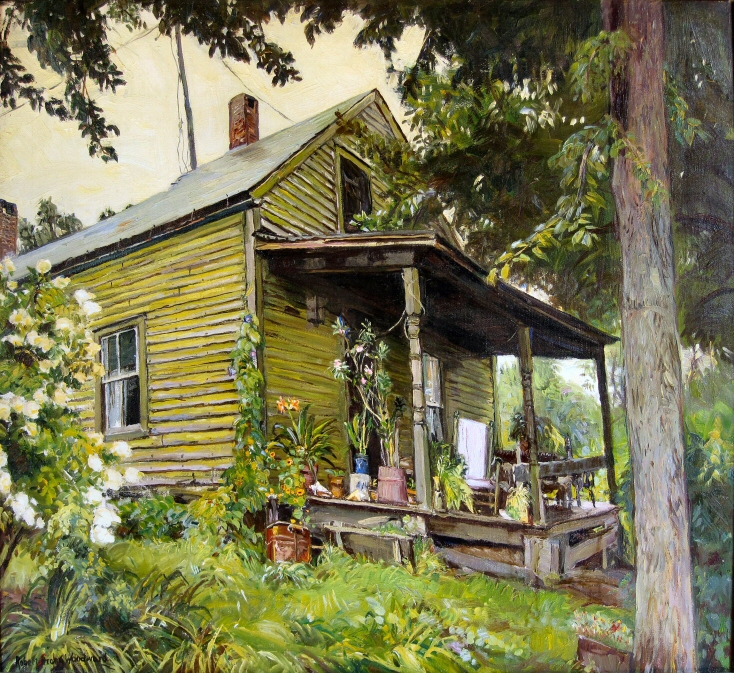
Mrs. Keach's Front Porch, 1933
From the back of this painting's sepia print: "In the
studio for sale. House, lemon yellow, together with The
Genial Old House one of my outstanding canvases."
Editor's Note:
We have made mention of this on other pages but in this case it may be accurate. Woodward
seems genuinely disappointed this painting did not receive more attention or praise or at the very least, was
better liked by the public. He kept it for his own personal collection perhaps because it was truly what he
considered his "finest expression" in paint.
Of the 11 or so paintings Woodward says are his favorite
this or that or "best" or "finest expressions" as he does with The Genial Old House... 9 remanded in
his personal collection not because he couldn't sell them but rather-- the right home never presented itself.
Like Mrs. Keach's Front Porch, which the artist called his
"masterpiece," we believe he was genuinely disappointed The Genial Old House did not end up in a
museum or at the very least in the private collection of a notable collector. We agree. Both The Genial
Old House and Mrs. Keach's Front Porch are personal favorites of the artist Estate and we are
equally surprised. See the comment in the caption (left).