
Quick Reference
1943 (November)
Patten District near
Massaemett Mountain
Shelburne, MA
Pastel on Board
Landscape
Landscapes & Views, Pastures
22" x 29"
No, was made as a gift
No, gifted to the Pettises
NA
Related Links
- See also the...
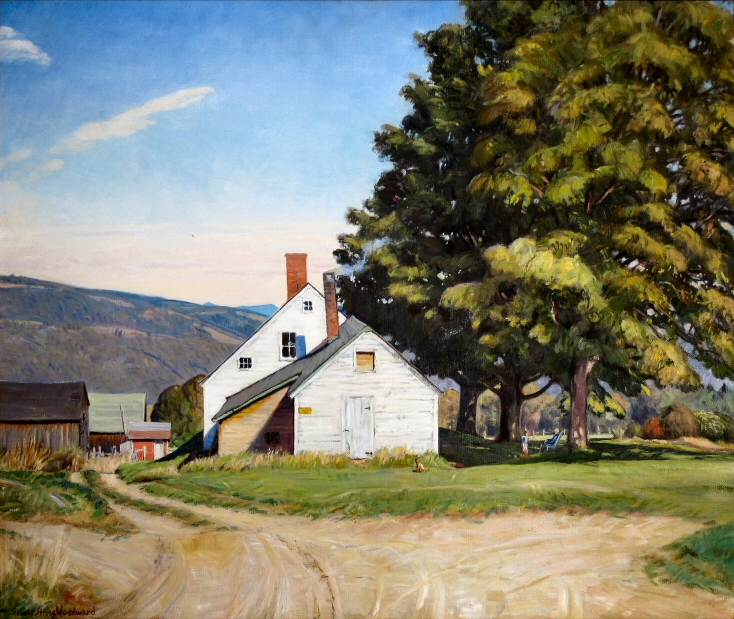 Late Summer Gallery to view related pieces.
- See also the...
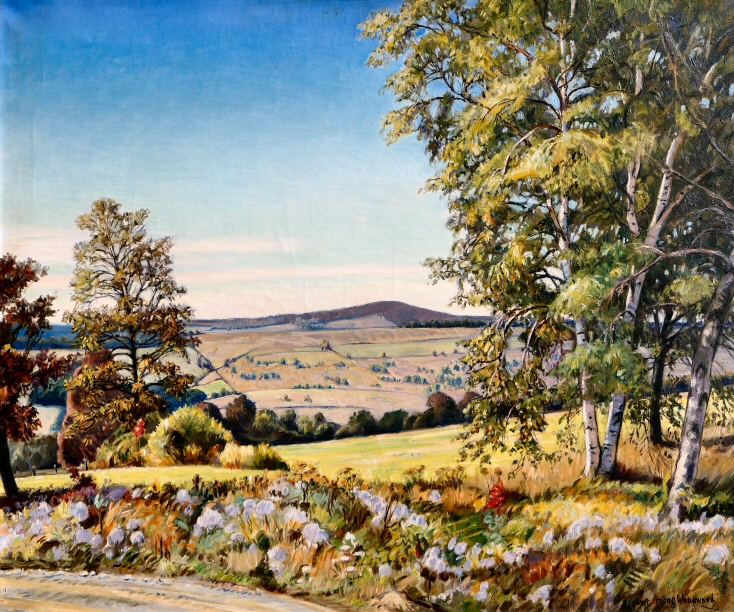 Landscapes & Views Gallery to view related pieces.
- See also the...
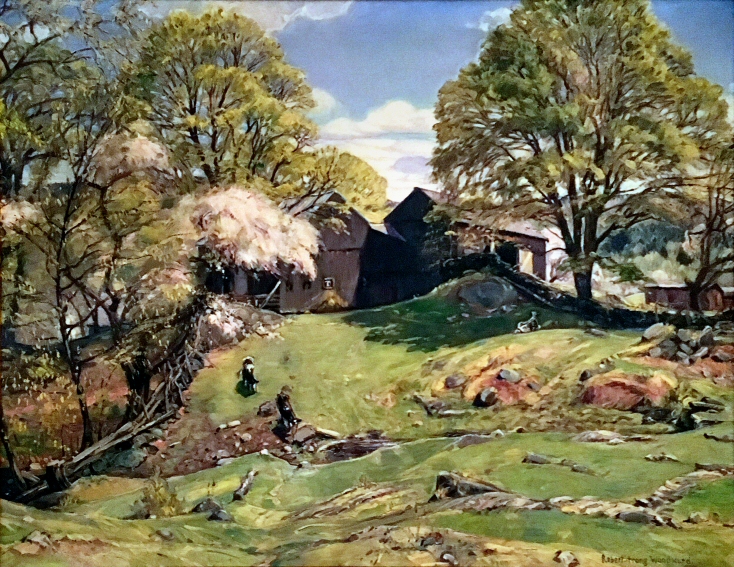 Pastures Gallery to view artwork.
- See also the...
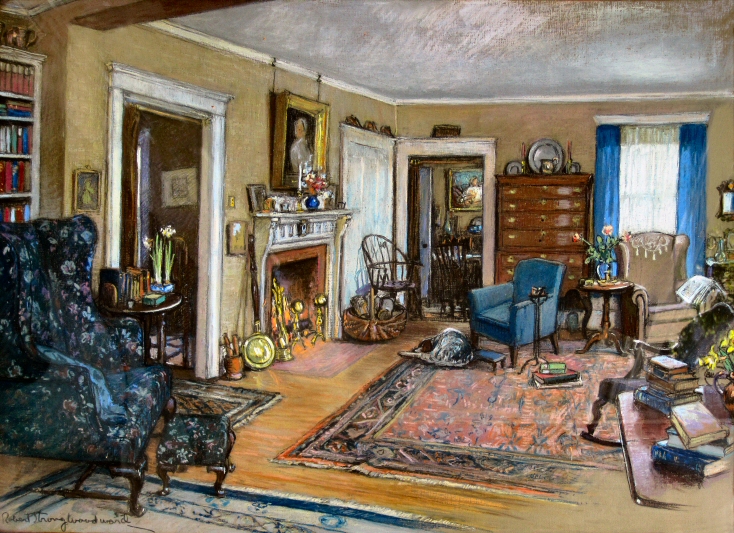 Chalks & Crayons Gallery to view other drawings
- See also the...
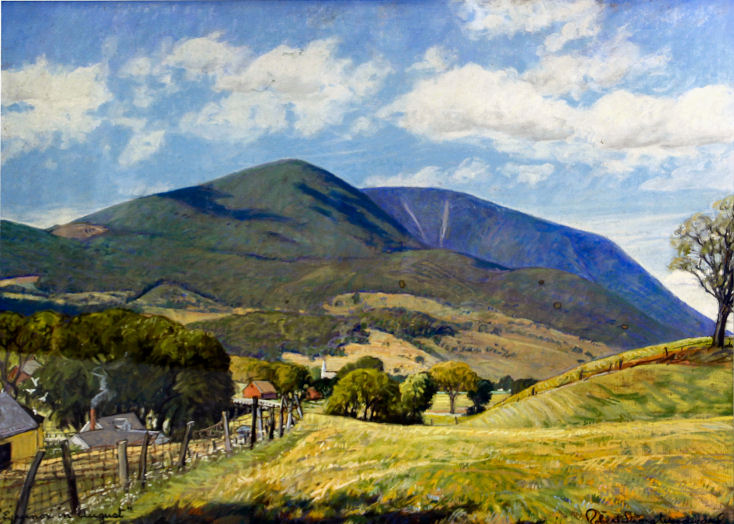 Mountains Gallery to view related pieces.
- See also the...
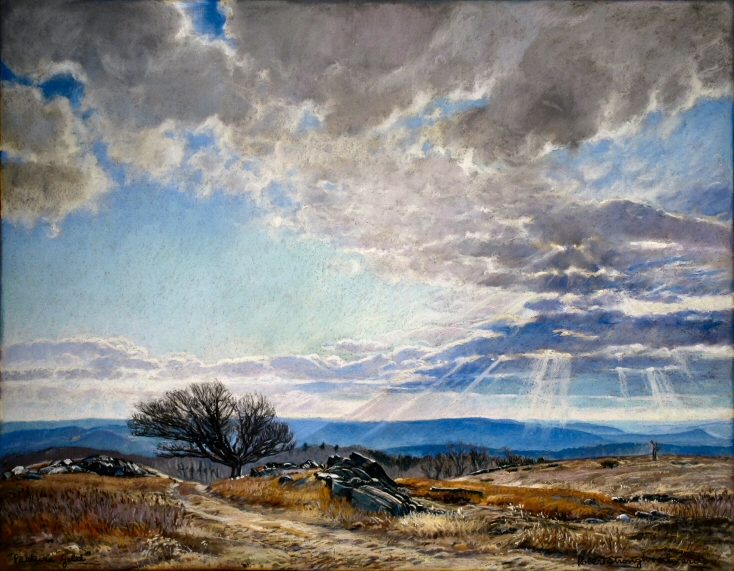 Stunning Skies Gallery to view related pieces.
- See also the...
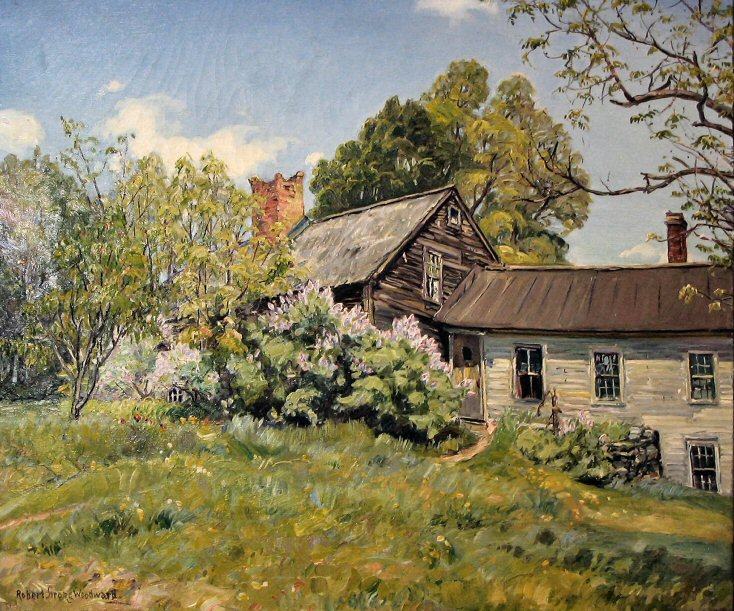 In Bloom Gallery to view related pieces.
- See also the...
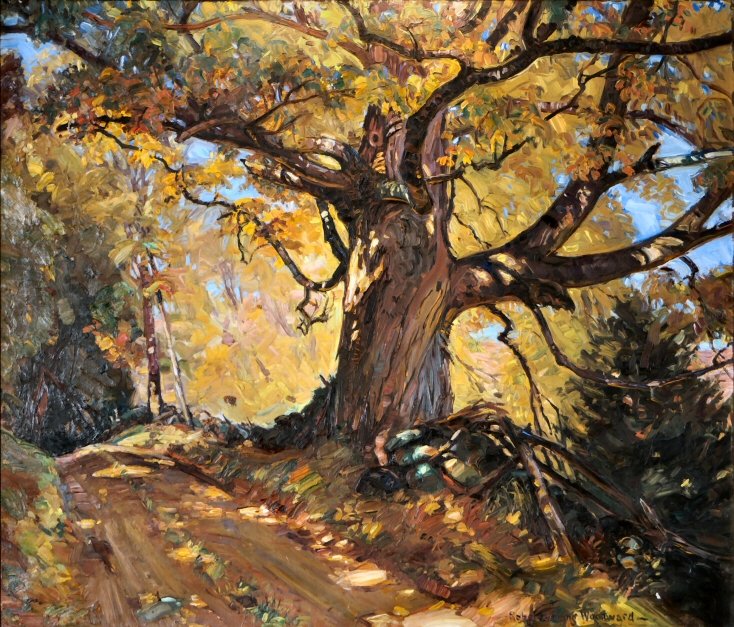 Trees Gallery to view related pieces.
- See also the...
 Roads & Streets Gallery to view related pieces.
.png)
Featured Artwork: When Autumn Comes

RSW's Diary Comments

A closer look at the details of the roadside.
An Excerpt from, A Clear September Day:
"A painting made from a chalk drawing of the same composition and subject, owned by Mr. Ralph Tognarelli..."
Editor's Note:
This is the pastel Woodward used to make the painting A Clear September Day, not Mr. Tognarelli's, which is named, September Pastoral. We have determined that it could not possibly be September Pastoral because in a letter dated Nov. 22, 1943, to friend, F. Earl Williams, Woodward tells him, "Last week I made a perfect copy of the Tognarelli chalk September Pastoral -- (which goes to the Tognarelli's tomorrow).
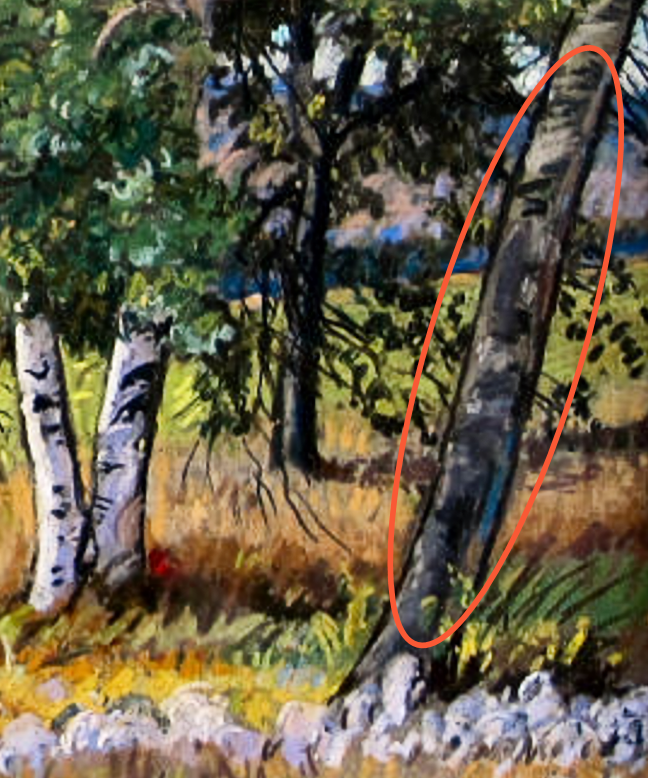
 An illustration of the "angled tree to the right"
from When Autumn Comes. Pastels are very hard to
fix so look at the tree and study the area on the right
There is no mention of an oil painting in this letter. Furthermore, in a follow
up letter to Williams, Woodward expresses his frustration fixing a criticism made by Williams about
the "angular tree" to the right of the scene. He complains to Williams, "I put more grace into that
right hand angular tree trunk which you criticized and it really was a great improvement..." We do
not have an image of September Pastoral to compare, but if we did, we are certain it would
be just slightly different when comparing it with the angular tree to the right in When Autumn
Comes.
We have looked closely at When Autumn Comes and we believe there is
evidence of Woodward altering the angled tree to the right.
⮜ See our illustration
to the left.
Additional Notes
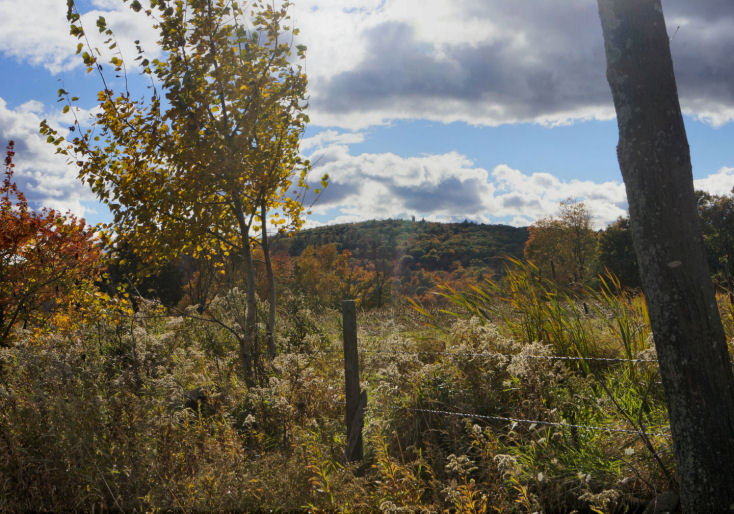
A photo we took of Patten District, Shelburne,
MA, as we searched for RSW's possible location in
the Patten District. We never came close BUT did
manage to find a "bank of fall weeds and asters."
The Patten District of Shellburne, Massachusetts, is the high pasture land of northwest Shelburne Massachusetts. Its name derives from a nickname area residents regarding the disciplined principles of its inhabitants being a "pattern" all others should follow. As explained by Gary Sanderson on his blog, TavernFare.com, "Over time became Patten in the old, obsolete, hilltown Yankee dialect..." (read his entire journey getting to the bottom of this mystery HERE - the page will open in a new tab). Still, looking at Woodward's vantage point facing southwest toward the peak of Massanet Mountain and the Shelburne fire tower, we can't help but see the discipline of those origins in the organized 'patterns' of the fields between him and the peak still alive in his day.
⮟ Below is a side by side comparison of A Clear September Day and When Autumn Comes. Woodward's pastels are about 15% smaller than the 25" x 30" oil canvases but because we have to size images more for website uniformity, than perspective, side by side comps can be misleading. Here it place them side by side we had to make the oil smaller. Keep in mind mind the oil (left) appears smaller but is not ⮟
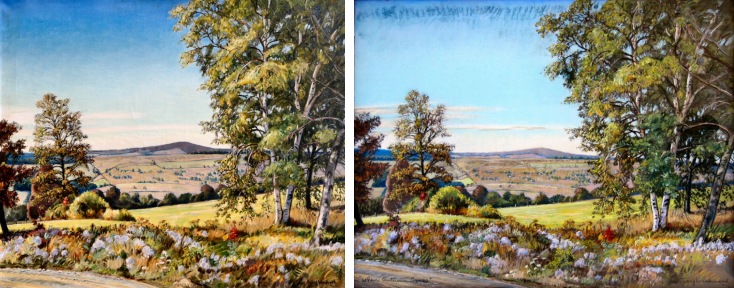
Here is a side x side comparison of the oil painting (left) and the chalk drawing When Autumn Comes (right)
♦ The paintings are so alike, if not for the dusting of loose chalk in the sky of When Autumn Comes it is nearly impossible to tell the difference from photographs side by side. The aspect ration also differs because the board RSW used for his chalks were 22" x 29" versus his canvases which were "25" x 30". Below, for illustration purposes, we laid the oil over top of the chalk at 50% opacity with a black drop shadow around the oil. Using the "V" of the double birch trees to the right as our alignment you can see how the two paintings differ ⮟
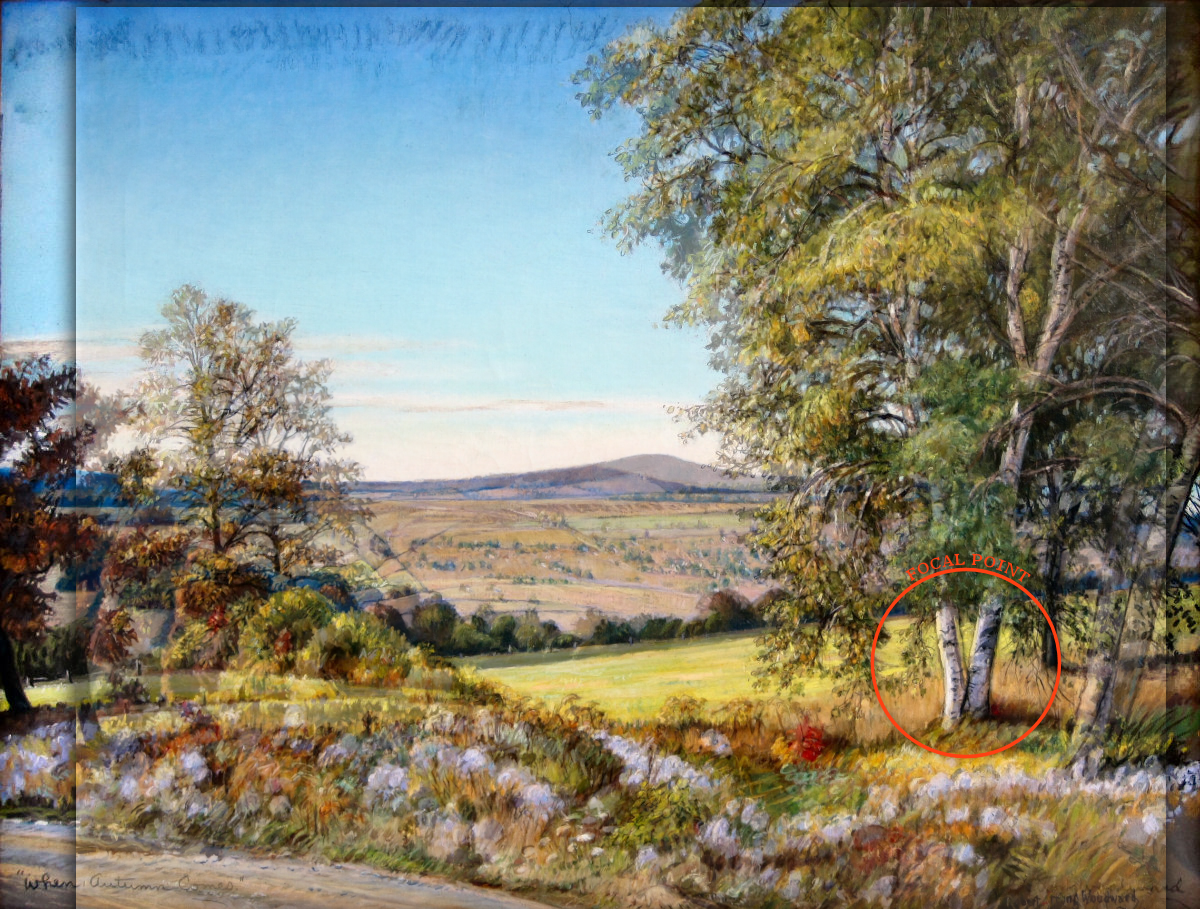
An overlay illustration of A Clear September Day on top of When Autumn Comes
⮝ Then biggest difference is found in the varying aspect ratios. The tree to the right, the peak of the distant mountain, and the tree to the left running off the page are stretched in the chalk and squeezed in the oil. But note how the foreground of brush varies very little.
---------------------------------------------------------------------------------------------------------------------------------
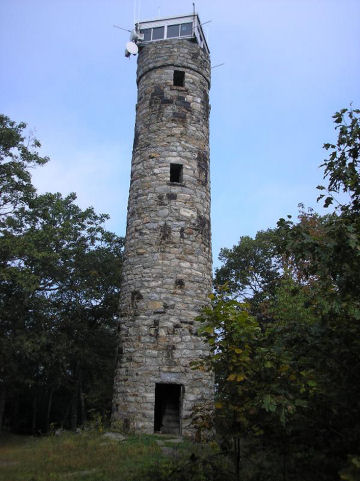
The Shelburne Fire Tower
♦ Although neither piece of artwork clearly shows it, Massemet Mountain's peak has a fire
observation tower and overlook. In When Autumn Comes, you can see a square form peek above
the tree line much more clearly than you can in A Clear September Day.
We should
also point out that Woodward's uncle Nelson "Spence" Woodward — who also lived in the old mill
converted to a modest home, Woodward called, "The Little Shop
for years until he met a woman, married, and moved to Tennessee. Spence manned the tower as its fire
observer for 26 years after serving in the military during the Civil War. In fact, two of Woodward's
uncles fought in the war. Woodward's father was too young to serve in the war, but he did serve in
the military and was trained as a civil engineer.
From the top of the tower, you can see all
of Shelburne, much of Buckland and Charlemont, as well as, the main street area known as Shelburne
Falls. For more on the tower, see our Scrapbook story on
Nelson "Spence" Woodward.