
Quick Reference
1930-'31
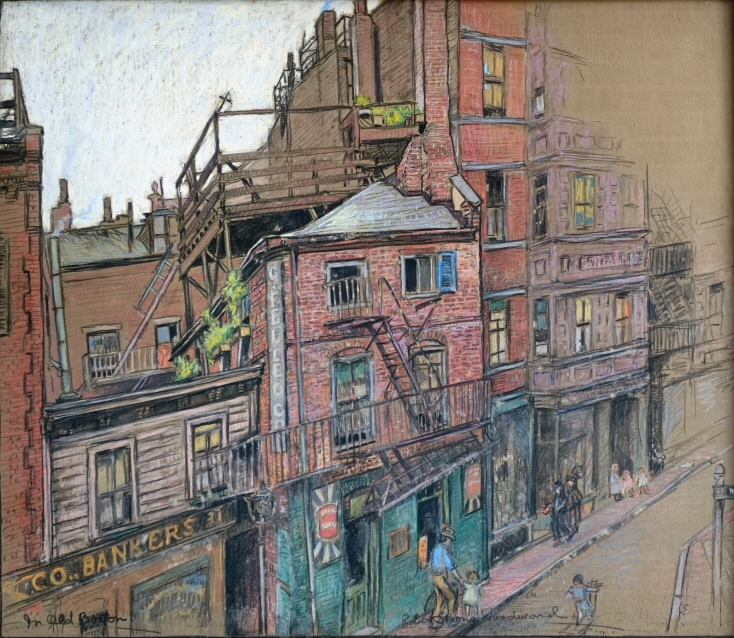
Union Street
Boston, MA
Pastel on Board
Urban Landscape
Boston
24 x 27
Myles Standish Gallery, Mar. 1931
Smith Coll. Tryon Gallery, 1931
Mt. Holyoke Coll. Dwight Hall, 1931
Williston Academy, 1933
Northfield Seminary, 1933
Mass Mutual Life Ins. Co., 1935
Deerfield Valley Artist Assoc., 1937
Myles Standish Gallery, 1944
Unknown
NA
Related Links
 relationship with
.png)
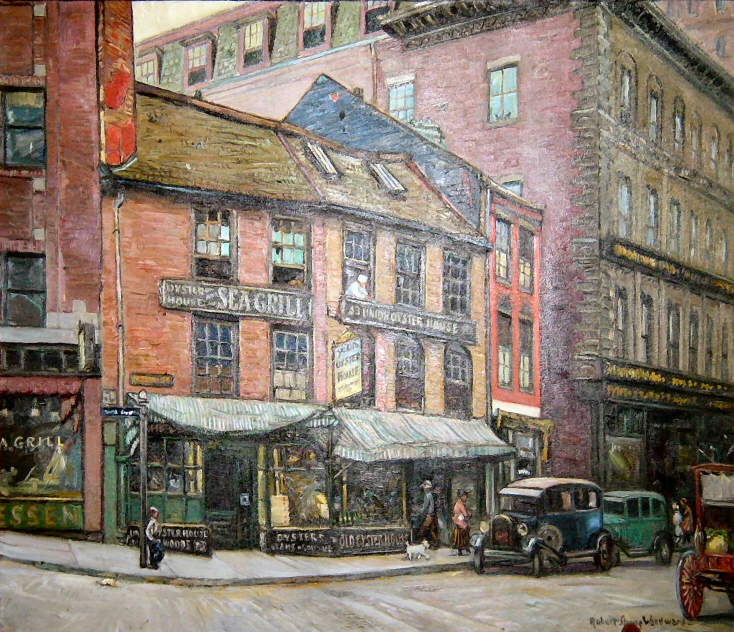
Featured Artwork: In Old Boston
RSW's Diary Comments
• Woodward did not keep records of the pastels he called "chalk drawings."
Editor's Note:
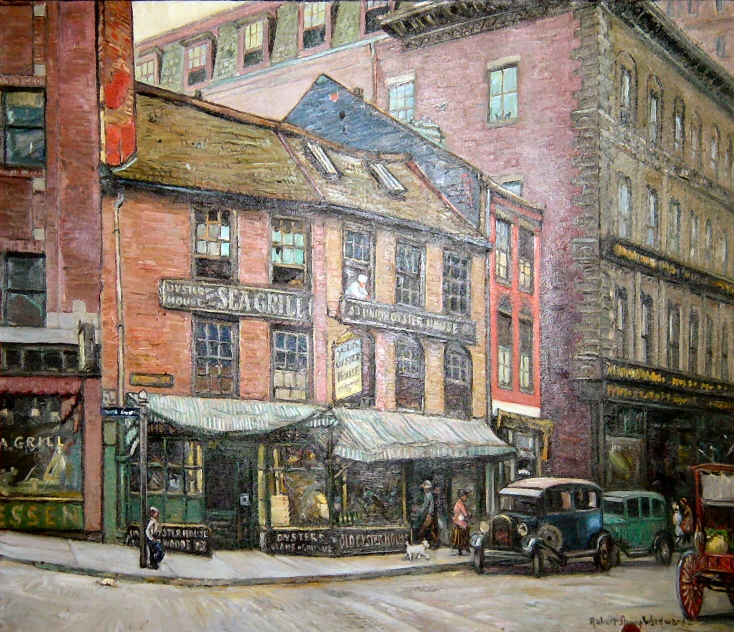
 In Old Boston, 1931, oil. This painting in no way
resembles the pastel of this page. Yet we do believe
there is an oil painting of the pastel scene. We simply do
not know its name or what ever became of it. However,
there is a 27" x 30" oil with the same name exhibiting.
around the same time but never at the same show as the
chalk or the 36" x 42" painting by the same name- hmm...
As an aside, the pastel above is the artist's rare attempt
at emulating the NYC "Ashcan" school's methodology,
"art rooted in the raw, visceral reality of the city,"
much the same way RSW was doing for the old NE farm.
Making sense of Woodward's Boston paintings are perhaps the most difficult process we have
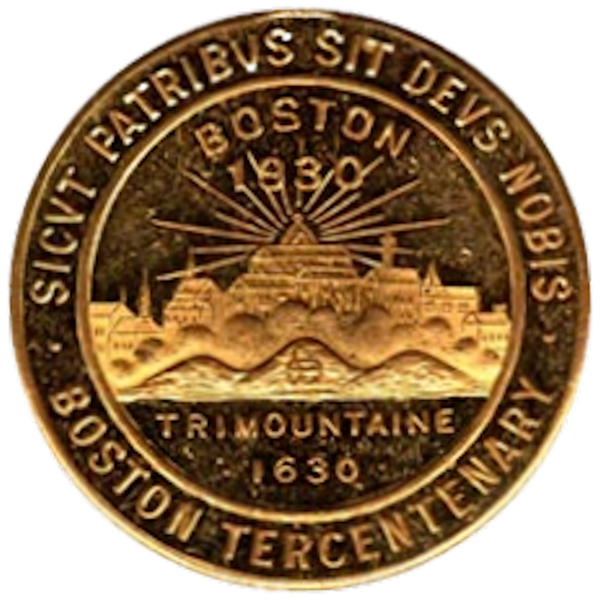
encountered putting together the website. In 1930, Woodward temporarily swapped homes with his dear cousin Florence Haeberle who was living in West
Newtown, MA, at the time. He went there to paint as part of the city's year long 300th birthday celebration.
We believe Woodward was there to capture scenes of old Boston while its citizens were feeling nostalgic. The
paintings are among the most romantic paintings of his entire catalog, such as, Ye Ole Oyster House and the
since demolished T Wharf.
The complications arise from his confusing painting diaries and the fact
that: (1) he made varying sizes and versions of the same scene; (2) then named them similarly, like with this
chalk being named the same as an oil by a different subject; (3) while exhibiting the various sizes at the
same time at differing shows; and finally (4), seemingly not satisfied with their names. He changed some to
another name years later and sometimes referred to other paintings, like the 36" x 42", oil version of In
Old Boston the "Oyster House" several times in his exhibition notes. It really is maddening and difficult
to track.
Additional Notes
Boston Globe, March 10, 1931 by A. J. Philpott in
regard to the oil painting by the same name:
"...a picture that should be in the 'old state house', for it shows one of the few architectural bits of old Boston along Union Street which carry back to the 18th century. And it is painted in just the right key."
 Note the above critique refers to the oil painting, of which this
drawing was a copy. We do not know the whereabouts of the oil.
Note the above critique refers to the oil painting, of which this
drawing was a copy. We do not know the whereabouts of the oil.
A large portion of the right-hand side
appears unfinished. It was not uncommon in a number of RSW pastels, in this time period. It was an attempt,
in part, of Woodward using modern devices such as these unfinished areas to give it a sketch-like feel to
it. There are a number of chalk drawings from this time period where the artist leave it to you fill in the
rest.
This chalk drawing is privately owned.
Just for fun, Click Here to learn what a good steak or lobster dinner cost
in the 1940's
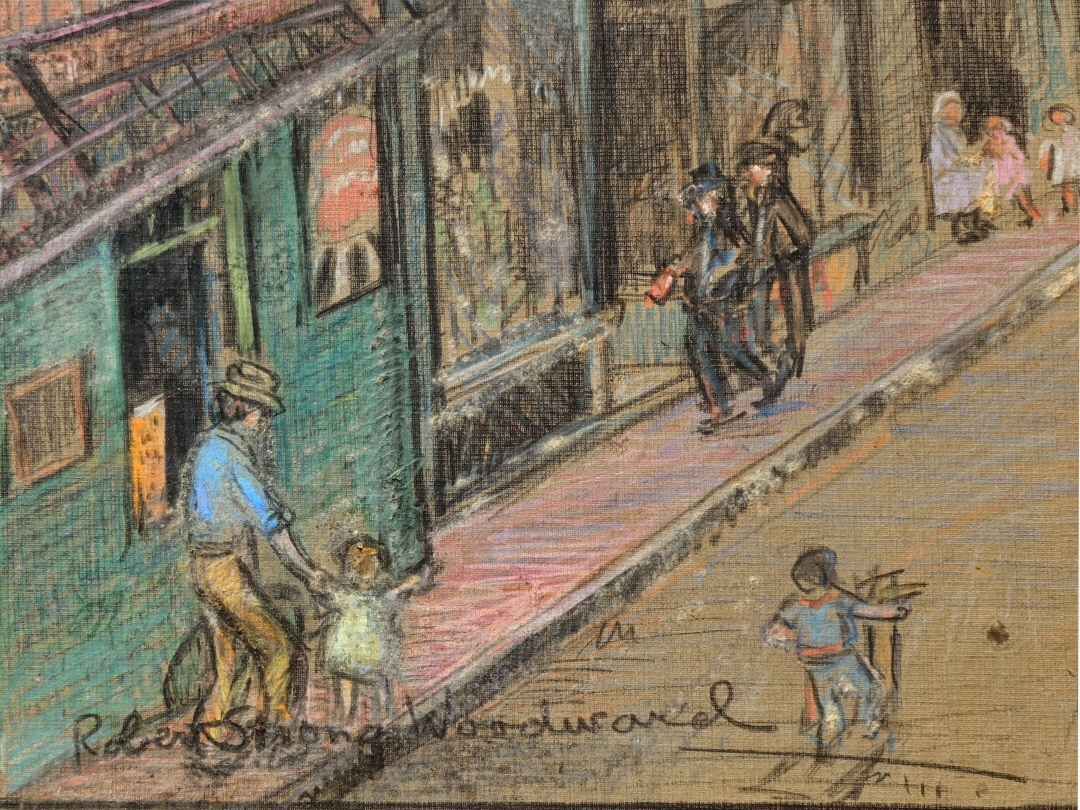
People on the Street
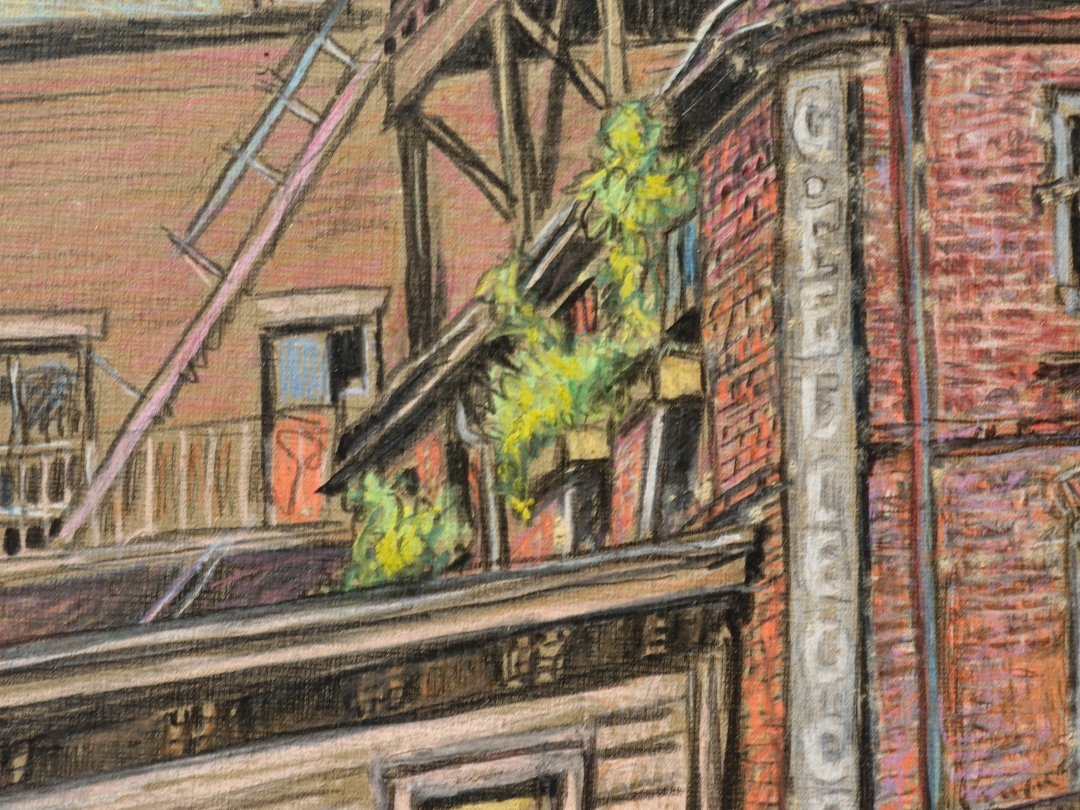
Close up of the planters
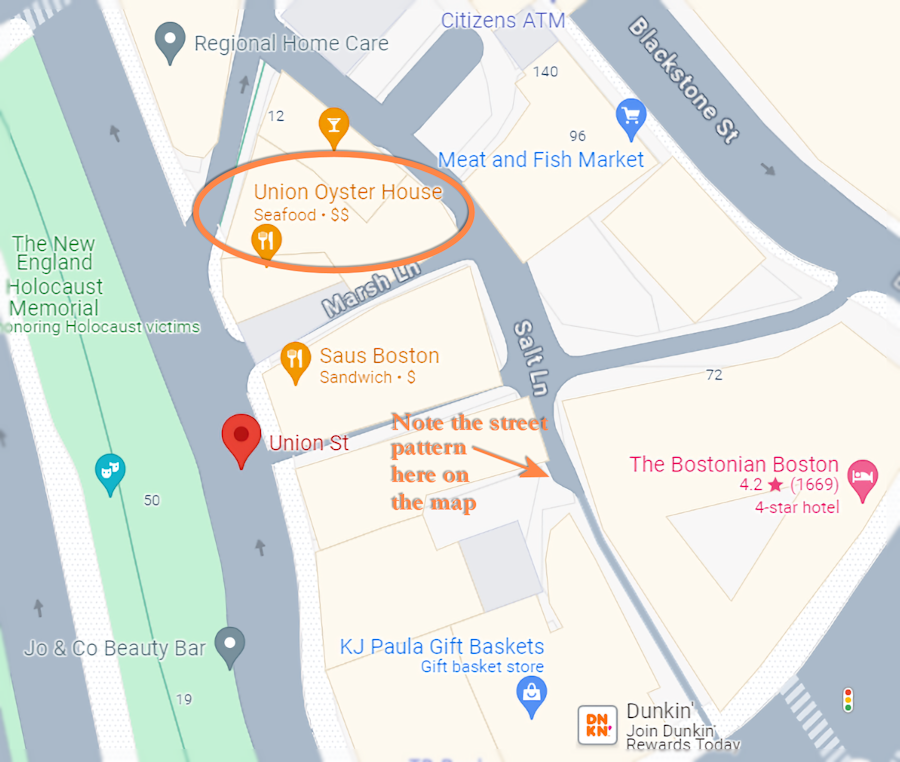
A capture of the area on Google Maps
If you look closely at the road area of the chalk drawing
you see that the street widens just to the lower right.
This map shows a similar street pattern on Salt Lane.
The neighborhood street you see in the pastel painting above is most
likely in the same area as the Ole Oyster House on Union Street. It appears more residential, meaning less
touristy than the crowd you would see around the famous restaurant but we have been unable to identify it for
certain. However, if you see how the street widens from a narrow path to a wider one. This scene could
possibly be Salt Lane immediately behind the oyster house building. Note there are no cars on the "street"
near what is probably just an alley people can walk.
Examine the Google map captured image to the
left and you will see a similar angle of road just behind the Oyster House on Salt Lane.
For an
excellent map of Boston in 1895 CLICK
HERE. The map will open in a new tab. Zoom in on it and see if you can find the location of the Ole
Oyster House. With the development of the new government center in the 20th century and the big dig of the
21st century. The area has changed so much. However, if you use the location of Faneuil Hall, and find Hanover
Street you will locate Green Dragon Lane today known as Union Street. Union Street did exist in 1895, just not
south of Hanover.