
Quick Reference
c. 1929
Unknown
Oil on Canvas
Landscape
Farm, Landscape & Views, People
36" x 42"
Pynchon Gallery, 1929
Unknown
NA
Related Links
- See also the...
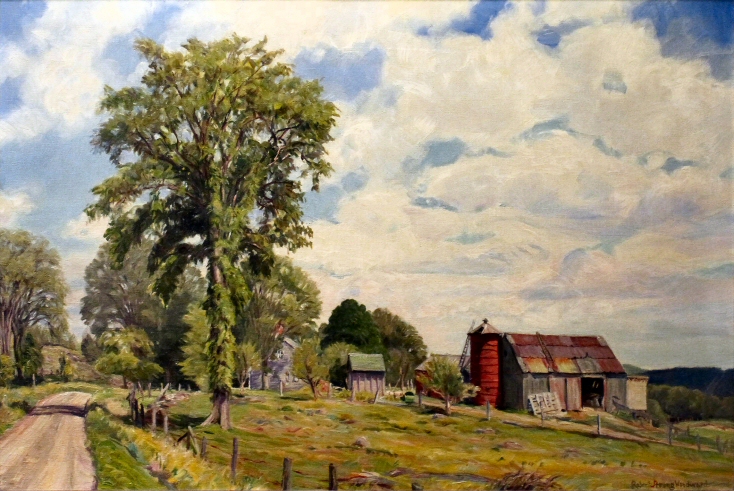 Farms Gallery to view related pieces.
- See also the...
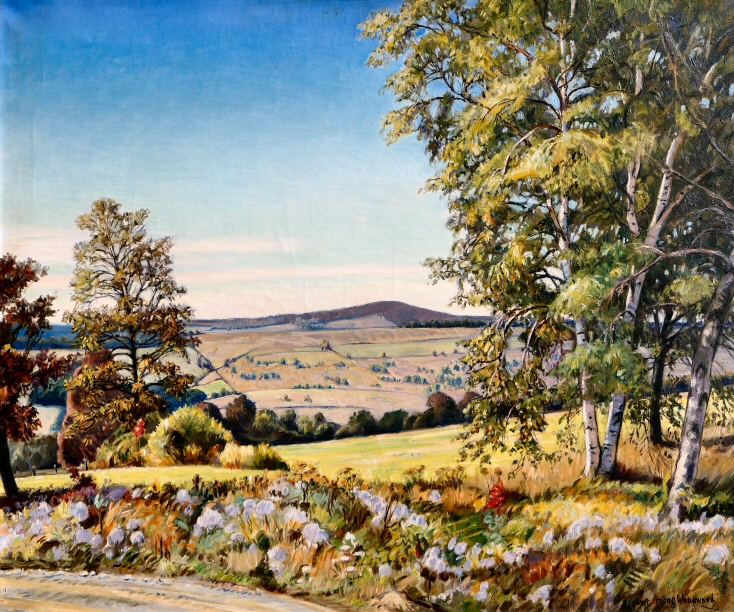 Landscapes & Views Gallery to view related pieces.
- See also the...
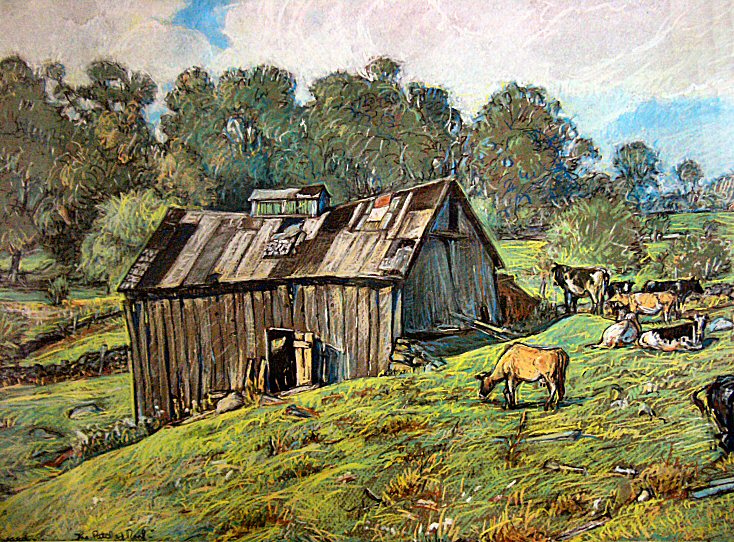 People & Livestock Gallery for related pieces.
- See also the...
734.png) "Even in November" gallery to view related work.
"Even in November" gallery to view related work.
- See December Farm, A Winter Sketch for further information.
- See Genial Old House, Chalk for further information.
- See Country Piazza for further information.
.png)
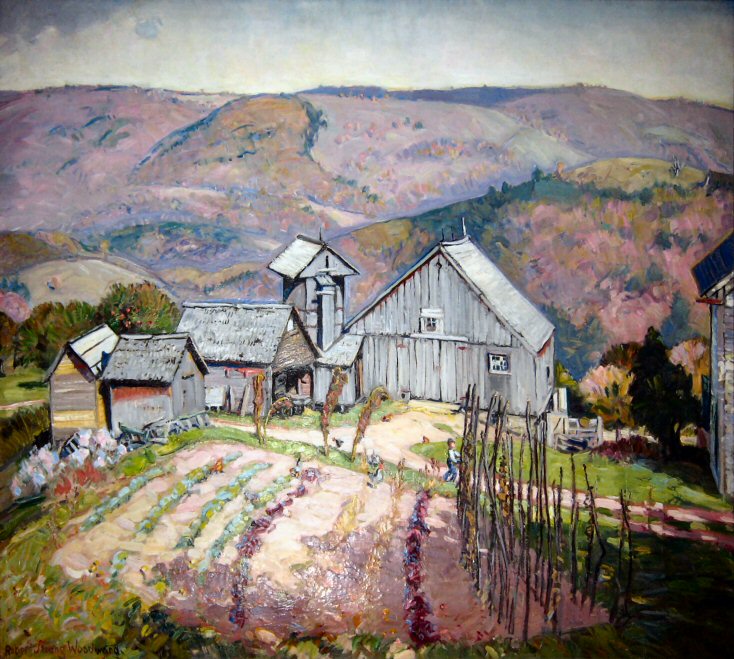
Featured Artwork: December Farm
RSW's Diary Comments
• There is no entry for this painting in the painting diary.
Editor's Note:
We have a lot to say about this painting below but for this portion we want to point out that this painting was very important to Woodward on a very personal level. He kept it for his own personal collection and FOR THAT reason, we are coming to realize that its omission from the artist's painting diary, among other things is probably intentional.
Additional Notes
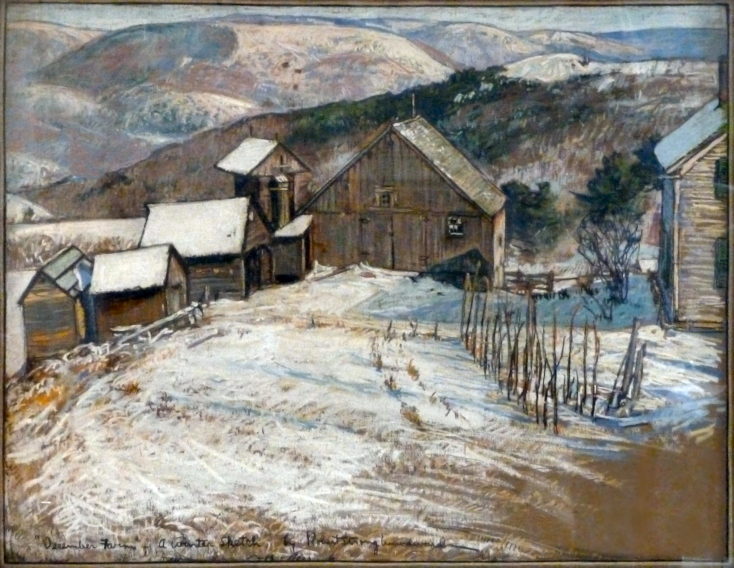
 December Farm, A Winter Sketch, 1929
We believe there are three other drawings of this scene:
A Winter Sketch, 1931
New England Farm, A Winter Sketch,1931
New England Winter, 1932
Unfortunately, their whereabouts are currently unknown.
There will always be unanswerable questions when it comes to anything related to the personal past of
someone. Like puzzles missing several pieces, the picture is incomplete. However, this painting resides in a
completely different realm of mystery.
It is signed and named, yet in Woodward's lifetime there is no
record of it ever exhibiting. No only that, there is inexplicably no entry for it in his painting diary
despite hanging in his home for nearly 30 years. Woodward obviously admired the scene. There are multiple
chalk/pastel versions of the same scene, all with varying differences in their name that HAVE exhibited and
frequently between 1929 and 1933.
This painting could have exhibited and we simply do not have the
records. It could have gotten its name that way. But the name now becomes a mystery because the scene is not
nearly as wintry and austere as the chalk sketches. In fact, it is hard for us to say what season this is. The
hills have coloring you would see before the spring bloom or late fall after the leaves have dropped. Spring's
early bloom can have many of the same hues and tones in the painting but the absence of any yellow leads us to
say it can't be spring leaving us later fall, early winter. It is possible this is December and the crops you
see in the ground are Autumn or Winter Cabbage or both.
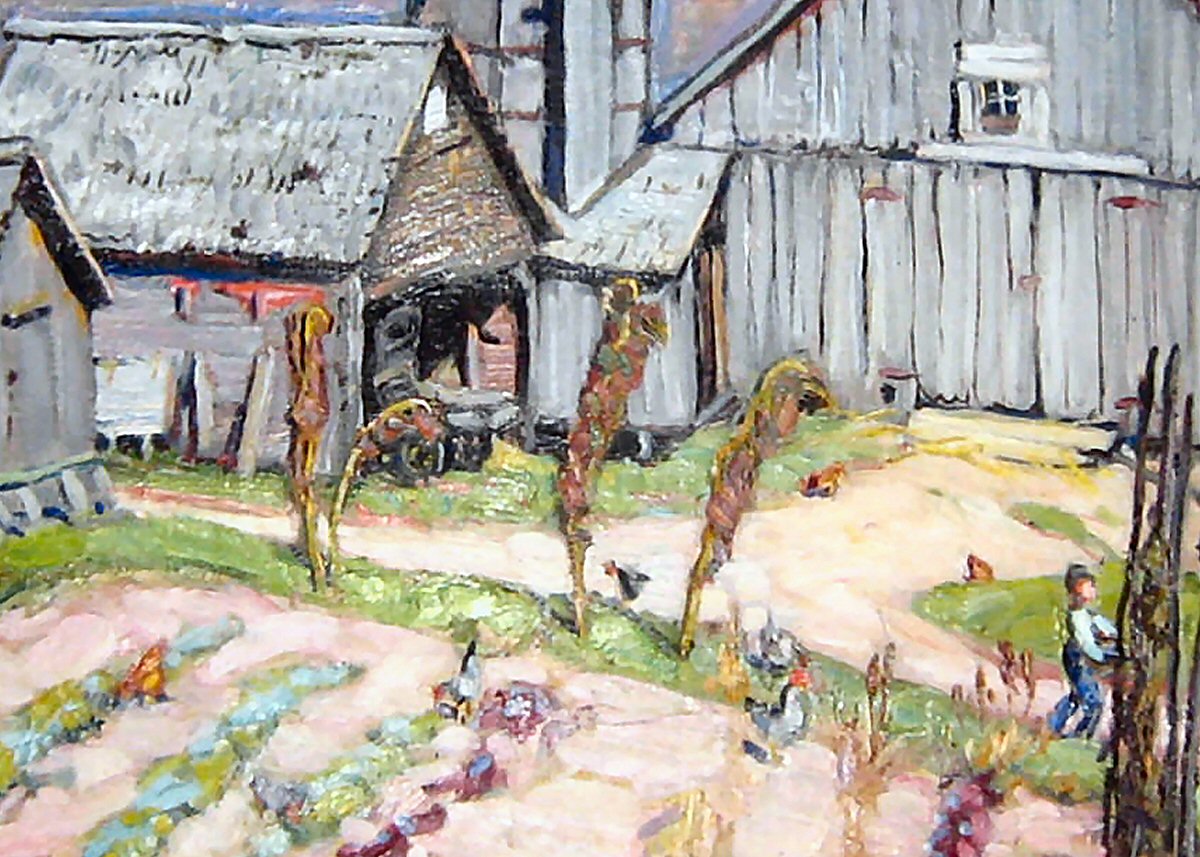
A close up of the crops.
Note the flatbed truck parked inside the barn.
The truck is notably absent in the sketch.
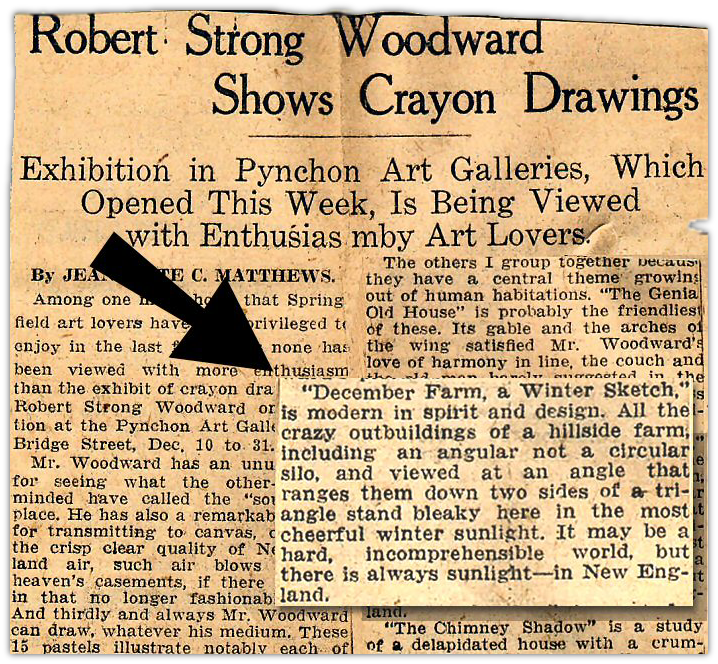
Springfield Republican, 1929
It then occurred to us that perhaps Woodward was being "poetic" with the name. That maybe "December" is a reference to the impending demise of a farm on its last legs or in its twilight. Is it possible Woodward knows something about the future of this farm and he is recording it for prosperity? Did he go back after a dusting of snow and the crops harvested to make the stark scenes of the chalks as a poetic device? And yet, as Jeanette Matthews points out in her review of December Farm, A Winter Sketch, 1929 that Woodward hints at a glimmer of hope and positivity with his glow of sublte light cast on the depressed farm.
Springfield Republican, 1929, by Jeanette C. Matthews
"'December Farm, a Winter Sketch,' is modern in spirit and design. All the crazy outbuildings of a hillside farm; including an angular not a circular silo, and viewed at an angle that ranges them down two sides of a triangle stand bleaky here in the most cheerful winter sunlight. It may be a hard, incomprehensible world, but there is always sunlight- in New England."
Is Ms. Matthews on to something? Did she see its message of hope? Although we do not believe Woodward
focused on hope as much as he did the promise of potential and an absolute faith in renewal and new life there
is something to this leading us back to its name - the cycles and seasons of life.
It is important to
offer some additional context here... December 1929 is just weeks after the most devastating financial
disasters in American history, Black Tuesday, the stockmarket crash that brought on the era of the Great
Depression. It is possible that RSW painted the oil the year before and went back when the farm was shuttered.
Note that the landscape is bare. The garage barn no longer has the truck parked inside it. Is this a farm that
went under as a result of the crash giving the oil its poetic name? If this is the case, that would make December Farm, A Winter Sketch a depression era editorial
piece similar to Genial Old House, Chalk, 1929 and Country Piazza, 1929.
We will never know the answer to any of
these questions unless we find an exhibit this oil hung on the walls. It will give us the date and year and we
would be curious to learn if it was painted before the chalk drawing were made.