
Quick Reference
c. 1923
Regate Studio
Oil on Canvas
Landscape
Brooks, Ponds, Rivers
25" x 30"
Unknown
Mr. and Mrs. Walter D. Deneque
NA
 The
The
.png)
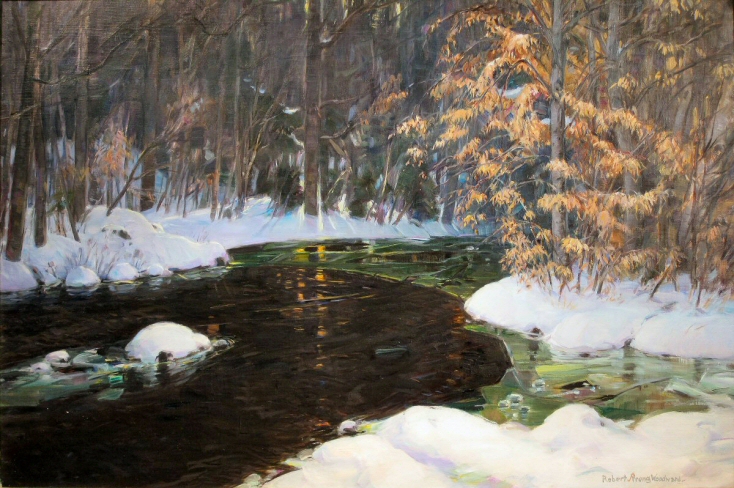
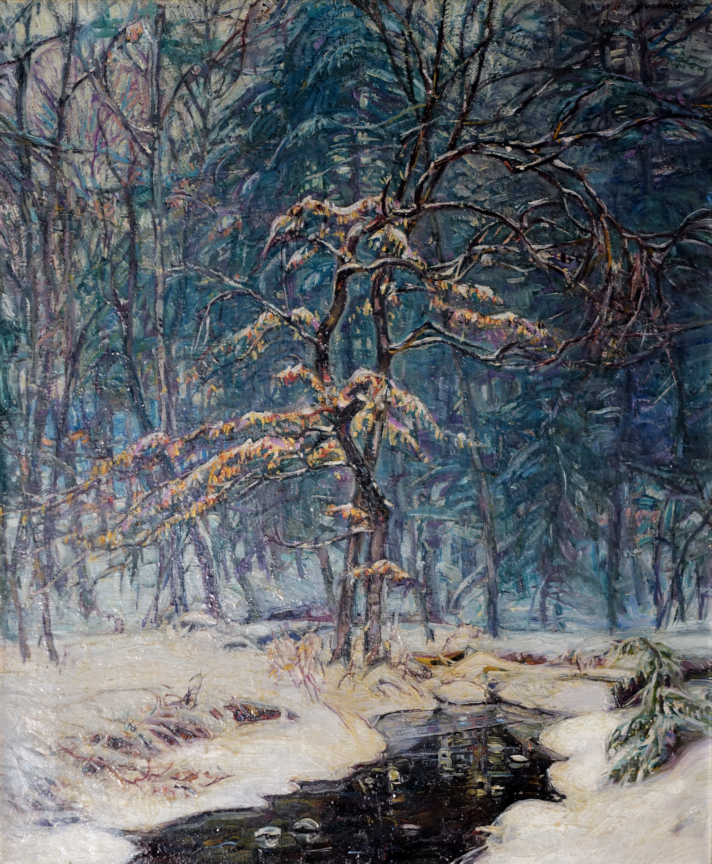
Featured Artwork: Evening Glow
662.png)
RSW's Diary Comments
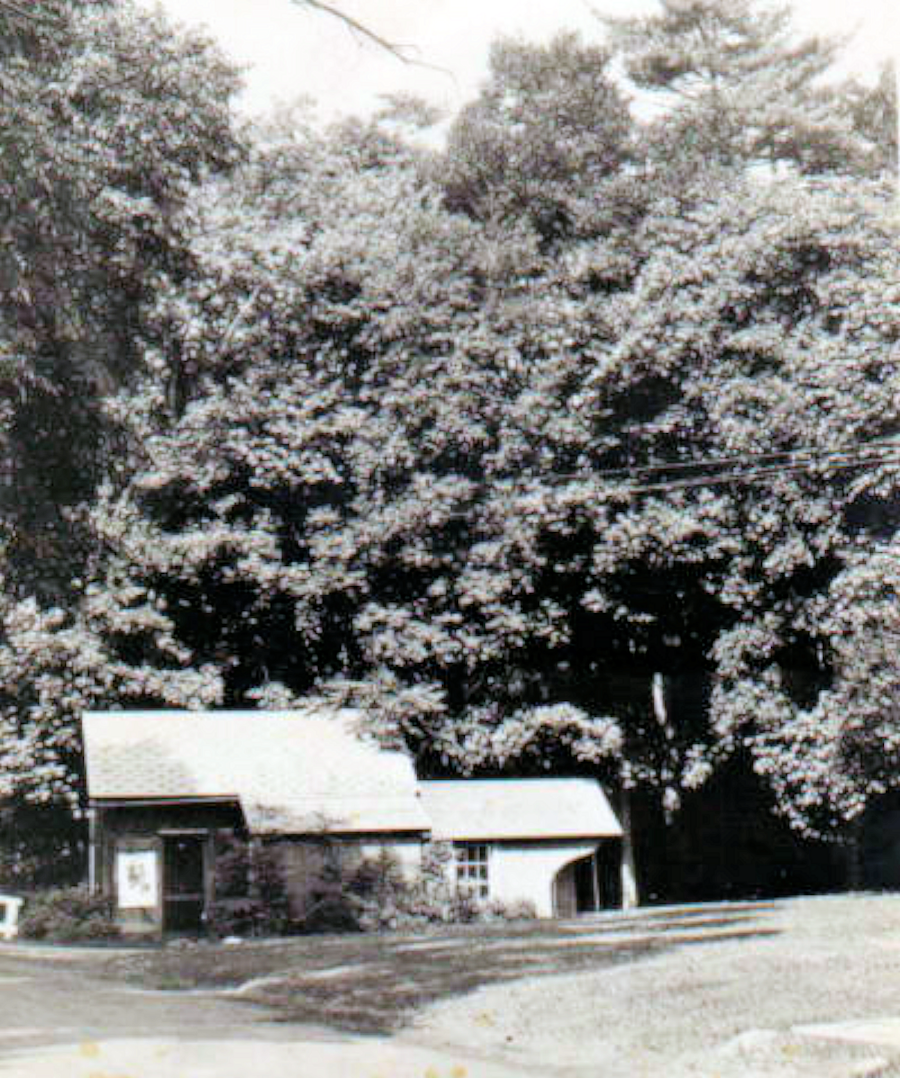
 Woodward's Redgate Studio. You can see
from this picture just how close the woods were
to the studio from which he painted these scenes.
"Painted in 1923. This painting of an evening stream in sunset glow I made soon after Redgate burned and sold to Mr. and Mrs. Walter D. Deneque of Washington, D. C. and Manchester, Mass. ( Mr. Deneque is now dead.)"
Editor's Note:
Many of Woodward's pre-1922 paintings were dusk-time, wooded interior scenes made from the doors and windows of his first studio, Redgate. After the devastating fire than destroyed Redgate. The artist, perhaps as part of his grieving process, returned to the location to continue painting his much-loved "Winter Evening Stream" paintings (WES for short). By 1928, these moody atmospheric paintings fell out of favor with one exception. In 1930, Boston's 300th birthday, Woodward had two paintings features in the Boston Globe's Sunday Special "Rotogravure" Section. October Gold (Jun. 29, 1930) and then Winter Silence (Dec. 28, 1930), a winter evening stream painting.
Additional Notes
MORE FROM THE EDITOR:
The picture of the painting you see above was previously "unnamed." What this means is it does
not have a name on its stretcher and its current owners to not have its provenance. However, in the process of
our audit, working on this very artwork page, and reading Woodward's description. This painting came to mind
immediately. Woodward's words, "an evening stream in sunset glow," fits this subject better than most. What is
more is that MOST Winter Evening Stream paintings are true nocturnes. Their glow comes from the artist's lamp
and moonlight. But this is a sunset glow, and the previously unnamed painting above fits the bill better
than any other we have ever seen. While we wouldn't bet our house on it, we would bet our car, it is Evening
Glow or something close to it. Should we learn this is not Evening Glow we will make the
necessary corrections and make record of our mistake.
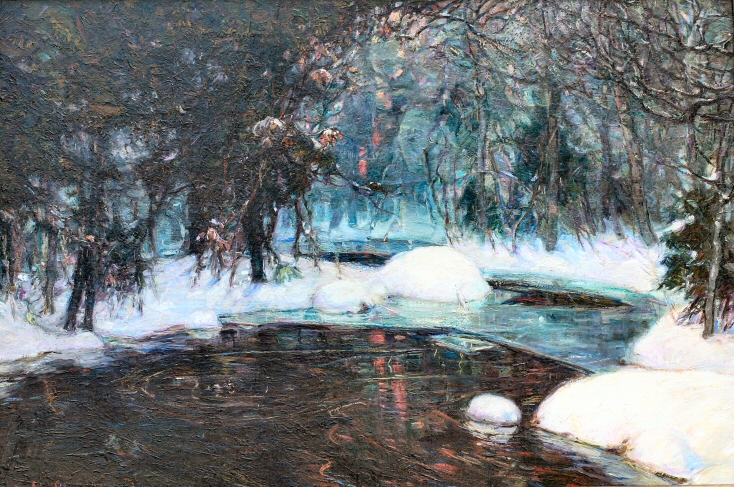
To the left: is another unnamed Winter Evening
Stream canvas that is unsigned. Because it is unsigned, it is most likely Woodward made it as a gift for
someone close to him. This canvas would not have a name for this reason, it was a gift. The painting above is
signed. Not only that, it is signed with the artist's famed Red "S" which he did not begin using consistently
until 1922 and thereafter which dates the painting above in the correct time period.