
Quick Reference
c. 1940
Heath Pasture
Pastel on Board
Landscape
Pastures, Trees
22" x 29"
Unknown
Unknown
NA
.png)
Featured Artwork: Double Victory
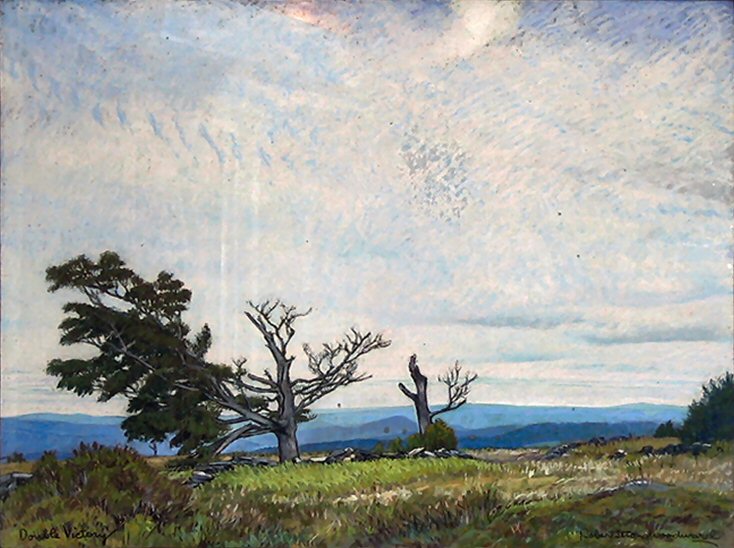
This image was sent to us by the owner.
RSW's Diary Comments
• Woodward did not keep records of the pastels he called "chalk drawings."
Additional Notes
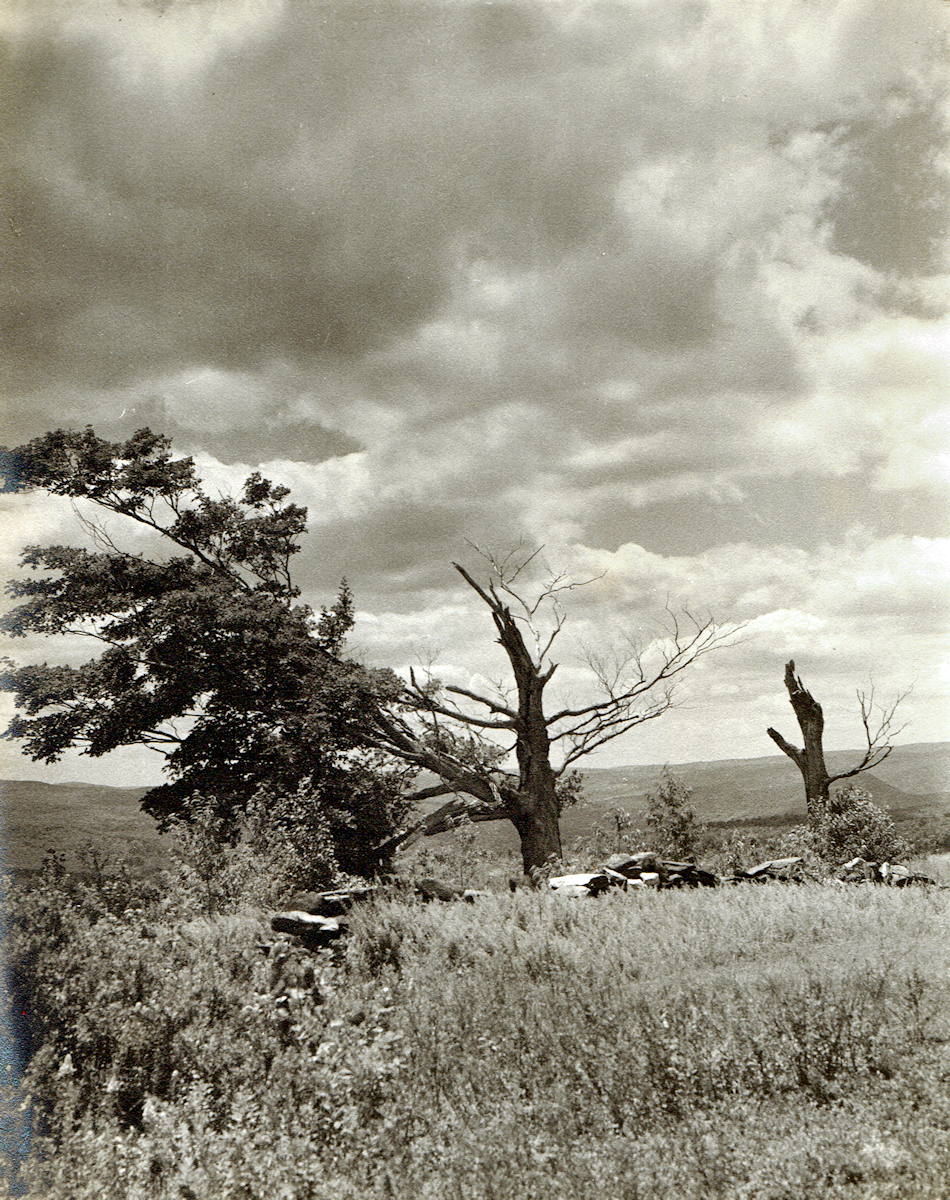
 A photograph of the Double Victory trees
 This chalk is an unusual "Heath" painting. Undoubtedly symbolic to Woodward
in both context and name with the two broken trees going on with life and living. It is one of the more literal
representations of a re-occurring commentary in most of his work - a second life and rebirth.
This chalk is an unusual "Heath" painting. Undoubtedly symbolic to Woodward
in both context and name with the two broken trees going on with life and living. It is one of the more literal
representations of a re-occurring commentary in most of his work - a second life and rebirth.
To the right is a photograph found in RSW's personal items. It is labeled,
"Photograph by, H.R. Ashworth, Shelburne Falls, Mass." We do not know if Ashworth took the picture. We think it
was more likely he developed the film for Woodward. Ashworth was the photographer of choice for many of his
sepia prints of his paintings.
The importance of these damaged trees found in the Heath pasture is
similar to that of the Beech Tree itself. Living in a harsh environment, a rocky unforgivable ledge, exposed to
the elements... wind swept and split in the middle. The double trees were probably broken in a storm. The image
is emblematic of RSW's own experience, in that, life goes on even after you are broken. But what is not
suggested here in this image is that Woodward loved life. Many people mistakenly see this and assume that it is
from a place of sadness. It is not. It is a resounding and affirmative symbol of triumph. Despite its damage,
life still flows from where it can, it adapts, goes on, and is everlasting. So long as one has the breath of
life, there is the potential for growth. Woodward knew this better than most.